
January 26, 2026
THE BLUF
Iran faces unprecedented pressure as U.S. sanctions senior security officials following brutal crackdown on protests, killing thousands. The EU and UK implement a new dynamic oil price cap mechanism reducing Russia’s crude ceiling to $44.10/barrel—cutting deeper into Moscow’s war financing as Venezuelan sanctions landscape transforms following Maduro’s capture.
SANCTIONS UPDATES
Iran: Targeting the Architects of Repression
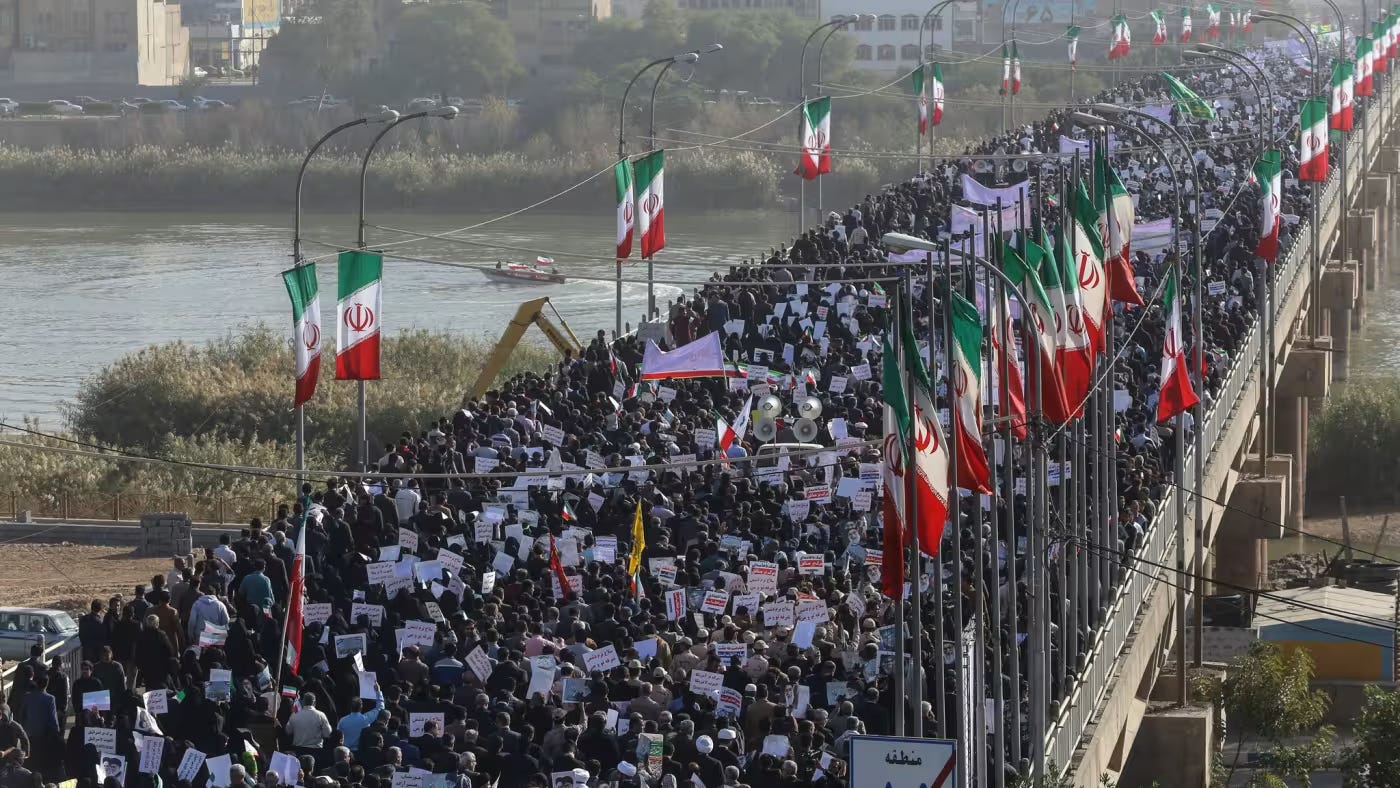
Treasury designated multiple senior Iranian security officials on January 15, including Ali Larijani, Secretary of Iran’s Supreme Council for National Security, for coordinating violent suppression of protests that began in late December 2025. The sanctions package targets provincial IRGC and Law Enforcement Force commanders in Lorestan and Fars provinces where security forces killed civilians and attacked hospitals. Treasury simultaneously sanctioned 18 entities operating Iran’s shadow banking networks that launder petroleum proceeds. These designations build on 2025’s aggressive pace—over 875 individuals, vessels, and aircraft were sanctioned last year as part of the Iran campaign.
Russia: Oil Price Cap Gets Dynamic
The EU and UK aligned on a major shift in the G7 oil price cap regime effective February 1, reducing the ceiling from $47.60 to $44.10 per barrel for Russian seaborne crude. The new mechanism is automatic and dynamic—maintaining the cap at 15% below Urals crude’s 22-week average market price. This represents the first application of the mechanism introduced in the EU’s 18th sanctions package. Both jurisdictions provide wind-down periods: the EU permits 90-day execution of contracts signed before January 15 under the old cap, while the UK allows trades until April 16 for contracts effective before January 31.
Venezuela: Post-Maduro Sanctions Recalibration
Following Nicolás Maduro’s January 3 capture in Operation Absolute Resolve, the sanctions landscape is in flux. President Trump has indicated plans to lift restrictions to facilitate U.S. oil company investment in Venezuela’s deteriorating infrastructure, though Treasury has yet to announce formal relief measures. The administration faces the complex task of unwinding targeted sanctions while maintaining pressure on remaining regime elements. General License 131B was issued authorizing transactions for Lukoil International GmbH contingent contracts, though broader Venezuela policy remains under development.
STRATEGIC CONTEXT
Iran’s Perfect Storm: Economic Collapse Meets Maximum Pressure
Iran enters 2026 catastrophically weakened. The rial’s 90% decline since 2018 and 40%+ inflation sparked December protests that killed over 3,000 people—the most serious regime challenge since 1979. September’s UN snapback sanctions reinstatement and Treasury’s 875+ designations throughout 2025 systematically dismantled revenue streams, with January 15’s shadow banking sanctions cutting deeper into petroleum proceeds laundering.
Supreme Leader Khamenei faces a stark choice: make historic concessions on nuclear programs and regional proxies to gain sanctions relief, or double down despite economic catastrophe. Trump’s military threats (backed by Caribbean force redeployment) created credible deterrent pressure, though he now signals openness to talks while maintaining “all options on the table.” For compliance professionals, Iran’s fragility creates both heightened enforcement risk and potential for rapid policy shifts if negotiations materialize.
Russia’s Revenue Squeeze: Dynamic Price Caps Meet Enforcement Escalation
The new dynamic oil price cap—pegged at 15% below Urals crude’s 22-week average—represents a fundamental enforcement shift. With Urals trading near $35/barrel (60% of October prices, $20 below Brent), Moscow faces severe fiscal constraints. Russia’s Deputy Prime Minister publicly admitted sanctions are forcing deeper discounts, confirming policy effectiveness.
The EU’s January 21 refined product ban targeting Indian and Turkish refineries adds another layer. Nayara Energy (49% Rosneft-owned, designated October 2025) exemplifies the compliance challenge: European importers must verify crude sourcing where Russian oil mingles with non-sanctioned feedstocks. Combined with October’s Rosneft and Lukoil designations, this creates a three-pronged squeeze on Russia’s primary revenue source.
Market fundamentals compound pressure: the IEA forecasts 3.85 million barrels/day oversupply in 2026—4% of global consumption—weakening OPEC+ cohesion and Russia’s pricing power. For compliance teams, distinguishing legitimate price volatility from sanctions evasion grows increasingly complex.
Venezuela’s Uncertain Transition and Sanctions Recalibration
The January 3 capture of Nicolás Maduro created fluid dynamics. Acting President Delcy Rodríguez—tracked by U.S. intelligence as a narcotics “priority target”—assumes temporary powers amid governance uncertainty. Trump indicated plans to lift restrictions for U.S. oil investment but has yet to announce formal relief measures, leaving compliance teams navigating ambiguity.
Venezuela’s 1.1 million barrels/day production represents significant opportunity, but the administration faces complex choices: unwinding targeted sanctions while maintaining pressure on remaining regime elements and coordinating with regional partners wary of military interventionism. The captured shadow fleet vessel Bella 1 illustrates how Venezuela sanctions intersect with Russia and Iran evasion networks—multilateral enforcement continues even as bilateral sanctions may ease.
Tariffs as Sanctions: Trump’s Economic Coercion Convergence
Trump’s tariff regime has reached 1946 levels (14.0% average rate), but crucially, tariffs are converging with sanctions as parallel coercion tools. His March 2025 executive order imposed 25% tariffs on Venezuela and any country purchasing Venezuelan oil—mirroring secondary sanctions but using IEEPA authority, the same statute underpinning most economic sanctions.
The Supreme Court’s review of presidential IEEPA tariff authority could affect both regimes. Recent actions demonstrate convergence: 10% tariffs threatened against European allies (rising to 25%) over Greenland, while Taiwan received semiconductor tariff exemptions—strategic carve-outs despite China sanctions pressures. Organizations must now track both traditional sanctions and tariff-based coercion under overlapping legal frameworks.
India-EU Trade Deal: Sanctions Compliance Meets Strategic Realignment
India and the EU are finalizing what Commission President von der Leyen calls the “mother of all trade deals,” expected to be signed tomorrow at the India-EU Summit. Trade Commissioner Šefčovič confirmed Saturday that negotiations are “nearing conclusion.”
The sanctions paradox: India is the critical outlet for Russian crude, feeding refineries like Nayara Energy (designated October 2025) that re-export refined products. The EU’s January 21 ban targets this flow, yet this FTA would grant India’s refining sector enhanced European market access. European companies must reconcile preferential trade terms with heightened scrutiny of Russian sanctions evasion through Indian intermediaries—verifying crude sourcing where Russian oil mingles with non-sanctioned feedstocks. The timing is deliberate: both sides seek to cushion Trump’s aggressive tariffs. Watch for how final terms address verification requirements and the Carbon Border Adjustment Mechanism.
COMPLIANCE CORNER
Navigating the New Russia Oil Price Cap
The dynamic price cap mechanism requires immediate attention to contract review and compliance processes:
What changed: The cap automatically adjusts every six months based on Urals crude’s 22-week rolling average, staying 15% below market price. This ends the static $60 cap era and creates ongoing compliance obligations.
Ongoing monitoring requirements: The cap now adjusts every six months without prior notice beyond the formula calculation. Organizations transacting in Russian crude or providing related services (shipping, insurance, financing) face perpetual compliance obligations rather than one-time policy reviews. The February 1 reduction to $44.10/barrel is the first application; the next adjustment occurs mid-2026.
Transitional complexity: Both the EU and UK provide wind-down periods for contracts signed under the old $47.60 cap—90 days from January 15 for EU entities, and until April 16 for UK persons. However, contracts executed after these dates fall under the new cap even if signed earlier. Service providers must track contract signature dates, execution dates, and applicable jurisdictional wind-down periods simultaneously.
Verification burdens: With Urals trading near $35/barrel in Baltic and Black Sea markets, there’s currently $9 of headroom beneath the $44.10 cap. This gap creates risk: shadow fleet operators could claim prices near the cap ceiling while actual transactions occur far below, potentially masking sanctions evasion. Service providers bear responsibility for obtaining and verifying price attestations from buyers, though the EU has not yet issued detailed guidance on acceptable documentation standards.
Third-country enforcement: The January 21 EU ban on importing petroleum products refined from Russian crude in third countries (targeting Indian and Turkish refineries) intersects with the price cap regime. Nayara Energy in India (49% Rosneft-owned) was designated in October 2025. Entities in the refined product supply chain now face due diligence obligations across both crude sourcing and refinery ownership structures.
Practical considerations: The dynamic mechanism introduces uncertainty for long-term contracts and service agreements. Organizations must build internal processes capable of monitoring Urals crude pricing trends, calculating the 22-week average, and adjusting compliance thresholds semi-annually. Enhanced screening for newly designated entities in the Russian energy sector—including refineries, traders, and shadow fleet operators—becomes routine rather than episodic.
WATCHLIST
High Priority:
Iran nuclear facilities: Trump and Netanyahu both threatened strikes if reconstruction begins. Watch IAEA reporting and satellite imagery for activity at damaged sites.
Iranian rial stability: Currency at historic lows (1.42 million:USD). Further collapse could trigger renewed protests.
Venezuela transition governance: Rodriguez’s legal status, potential additional U.S. operations against narco-networks, pace of sanctions relief announcements.
Russia energy sector: Monitor compliance with new refined product import ban (effective January 21). Watch for EU enforcement actions against third-country refineries.
Elevated Watch:
Cuba and Nicaragua: Trump administration officials signaled these regimes are “next” following Venezuela operation. Watch for designation expansions.
Colombian President Petro: Designated October 2025 under counternarcotics authorities. U.S. persons face significant transaction restrictions.
North Korea-South Korea sanctions divergence: South Korean business groups publicly lobbying Seoul to lift unilateral sanctions on DPRK, creating potential compliance gaps with U.S./UN measures.
Sectors Under Pressure:
Maritime transport and insurance (shadow fleet enforcement intensifying)
Oil refineries in India, Turkey processing Russian crude
Financial institutions with Iran exposure (shadow banking crackdown expanding)
CALENDAR
February 1, 2026: Russia oil price cap reduction takes effect ($44.10/barrel)
February-March 2026: Expected Treasury guidance on Venezuela sanctions relief framework
March 17, 2026: Next court date for Maduro prosecution in Southern District of New York
April 16, 2026: UK wind-down period expires for Russia crude contracts under old price cap
Mid-2026: EU price cap subject to six-month review (extraordinary reviews possible)
Ongoing: Congressional consideration of War Powers resolutions on Venezuela (S.J.Res. 98, others)
BLUF Brief is written by former intelligence analysts. Subscribe at blufbrief.com for weekly intelligence on sanctions, geopolitical risk, and compliance.
All information based on open-source reporting and is not legal advice.